FNV 0.00%↑ WPM 0.00%↑ RGLD 0.00%↑ ELE 0.00%↑
First post in this section, square one, and so is the compounder portfolio we’re building here, together, from scratch. Assume we have no open positions in this strategy, because that’s exactly how we’re starting. All new entries and changes will be posted, with real model portfolio.
In short, this section is dedicated solely to very long-term allocations. We’ll be buying things that ideally, we’re happy to hold forever. That is unless they get ridiculously expensive or the business deteriorates. In other words, this is the purest and most reliable form of investing.
It will take time to build the entire portfolio, good, there’s no rush, it’s meant to last. With entries, we wait for the opportunity to present itself, ideally panics, either in specific sectors or a general one. What matters more here is being ready, with a comprehensive list of the things we want to own.
We’ll also run an options overlay for near zero-cost hedging, it’ll be explained in details. Both when things are going very well and markets are extremely overbought, and when we’re entering a bear market but don’t want to exit, even temporarily, for a variety of reasons. More on that later.
Now, after that brief intro, let’s move to the first sector that in our opinion belongs in every compounder portfolio out there: royalty and streaming companies.
Royalty and streaming
At first look, they’re not the intuitive pick for strategies like this. Compounding here is different from how it’s typically understood, as dividends and buybacks. Here it refers to capital employed versus claim on the ounces that are still in the ground; gold, silver, sometimes copper.
So, let’s dive in and see why it’s one of the best business models out there, period, in mining or any other sector.
The idea is simple, and we like simple ideas. A royalty or streaming company gives a miner money upfront, usually to build or expand a mine. In return it gets a slice of that mine’s future production, for life.
With a royalty, that’s a percentage of revenue. With a stream, it’s the right to buy a share of the metal at a fixed low price, or a small percentage of spot.
They don’t run the mine, there’s no capex, no rising energy and equipment costs. That’s the operator’s problem. Margins stay fat through the cycle, headcount stays tiny, and one company can hold dozens of assets across many mines and jurisdictions. Diversification comes built in.
They don’t pay for exploration either, yet they get all the upside. When the operator drills, finds more ounces and extends the mine life, the royalty extends with it. Free optionality, paid for by someone else.
Now the cycle, and this is the best part.
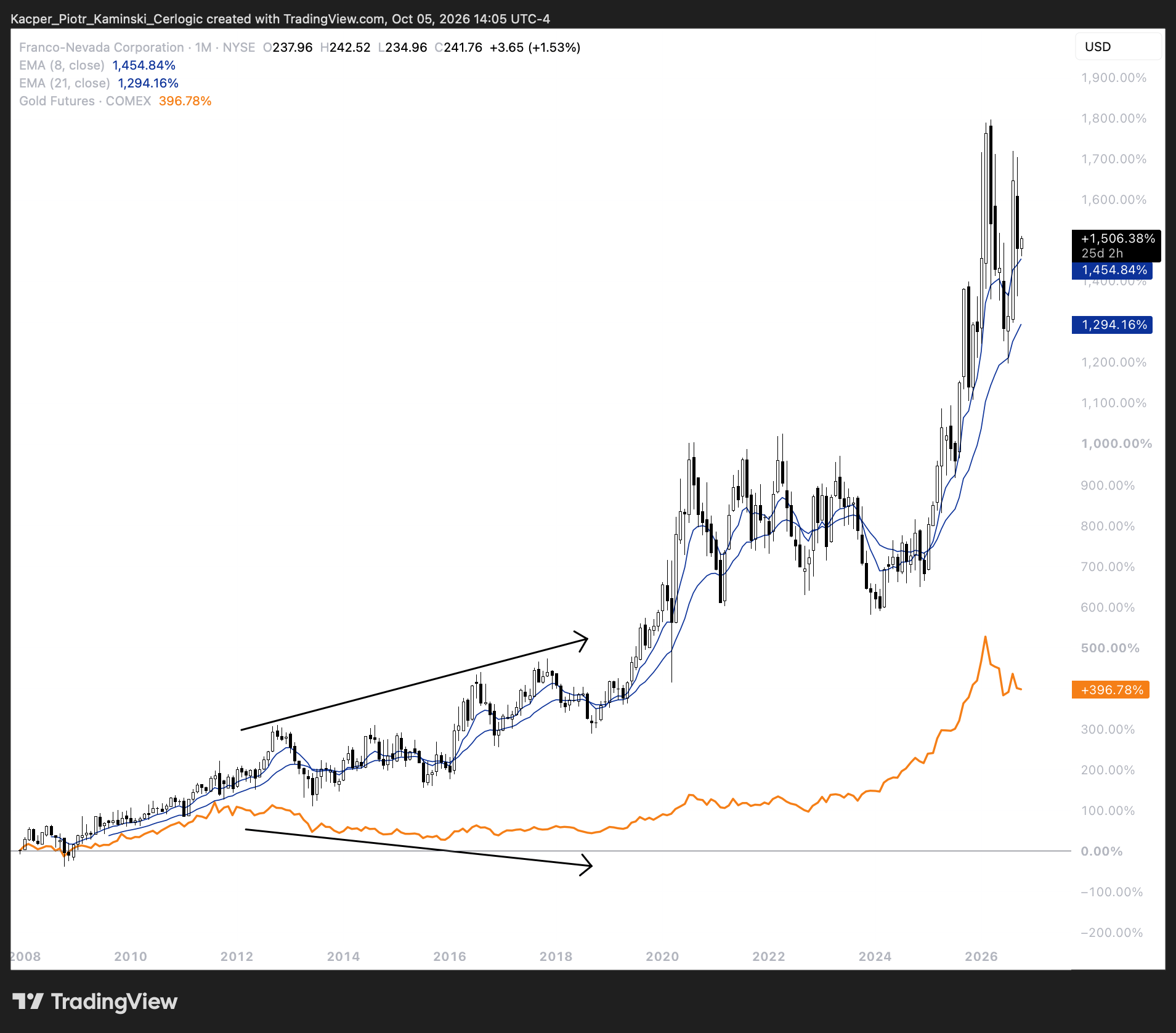
In bear markets, miners are starved of capital. Equity is expensive, banks won’t lend, and projects stall. That’s exactly when royalty companies can step in, as one of the few sources of financing left, and they get great deals. Low prices, large slices of production, high-quality assets bought at the bottom of the cycle.
And in bull markets, it’s harvest time, all turns in their favor. Margins expand with every dollar the metal price rises. A wave of exploration, new discoveries, restarts and mine ramp-ups adds to their portfolios, at no cost to them. Mines they financed years earlier come online just as prices are strong.
So they buy cheap when nobody else will, and get paid most when everyone wants in, ideally. The cash flow gets recycled into new deals, and over time the ounces per share keep growing. That’s the compounding.
The risks are real, but different. They depend on operators to execute, on jurisdictions that don’t change the rules, and on management not overpaying for deals at the top of the cycle. That last one is the one we watch most.
FNV 0.00%↑ performance below during brutal 2011-2013 to 2016-2018 period.