

“Longevity is the key to success.”
Ed Seykota
EQUITY MARKETS – INDICES
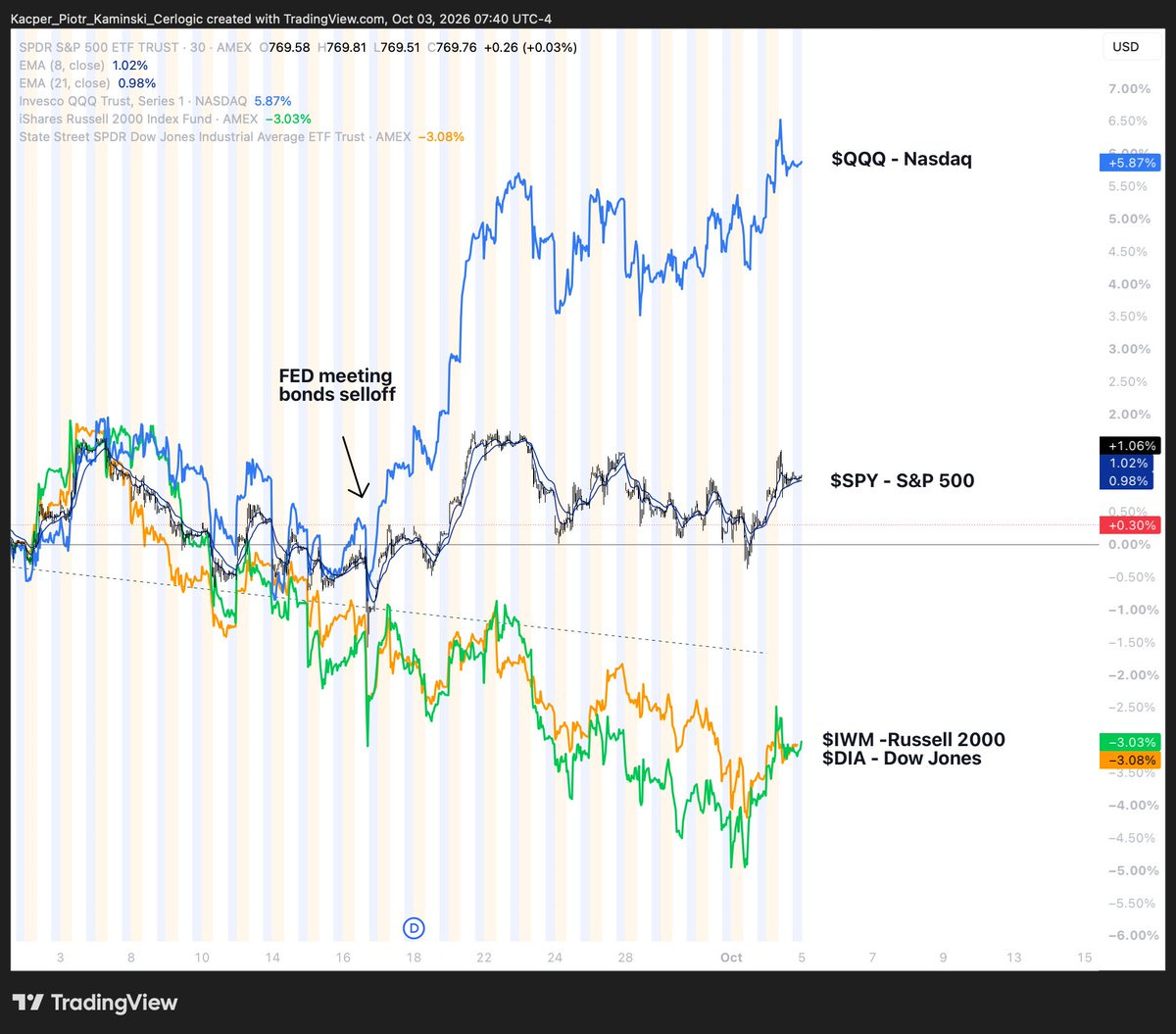
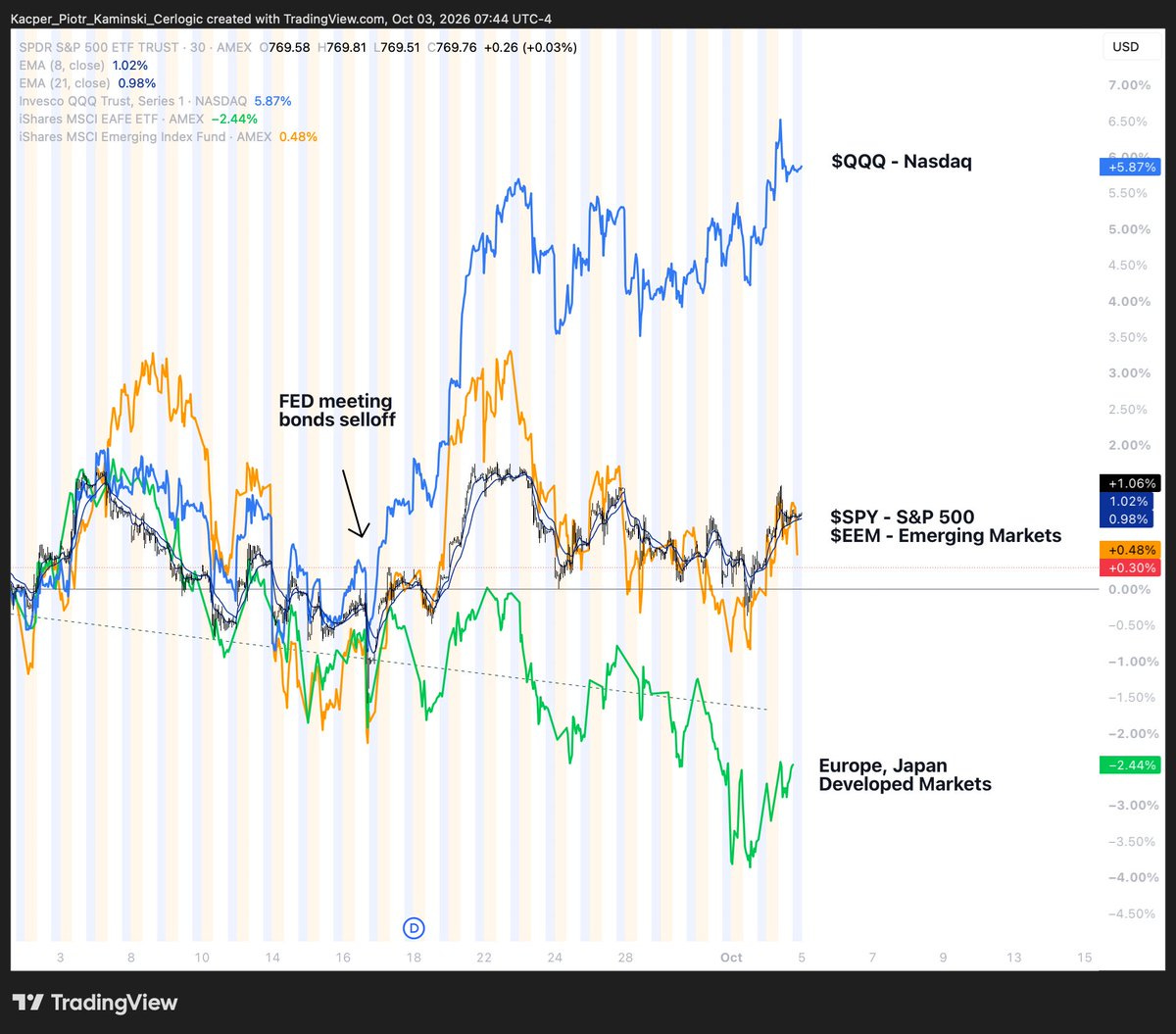
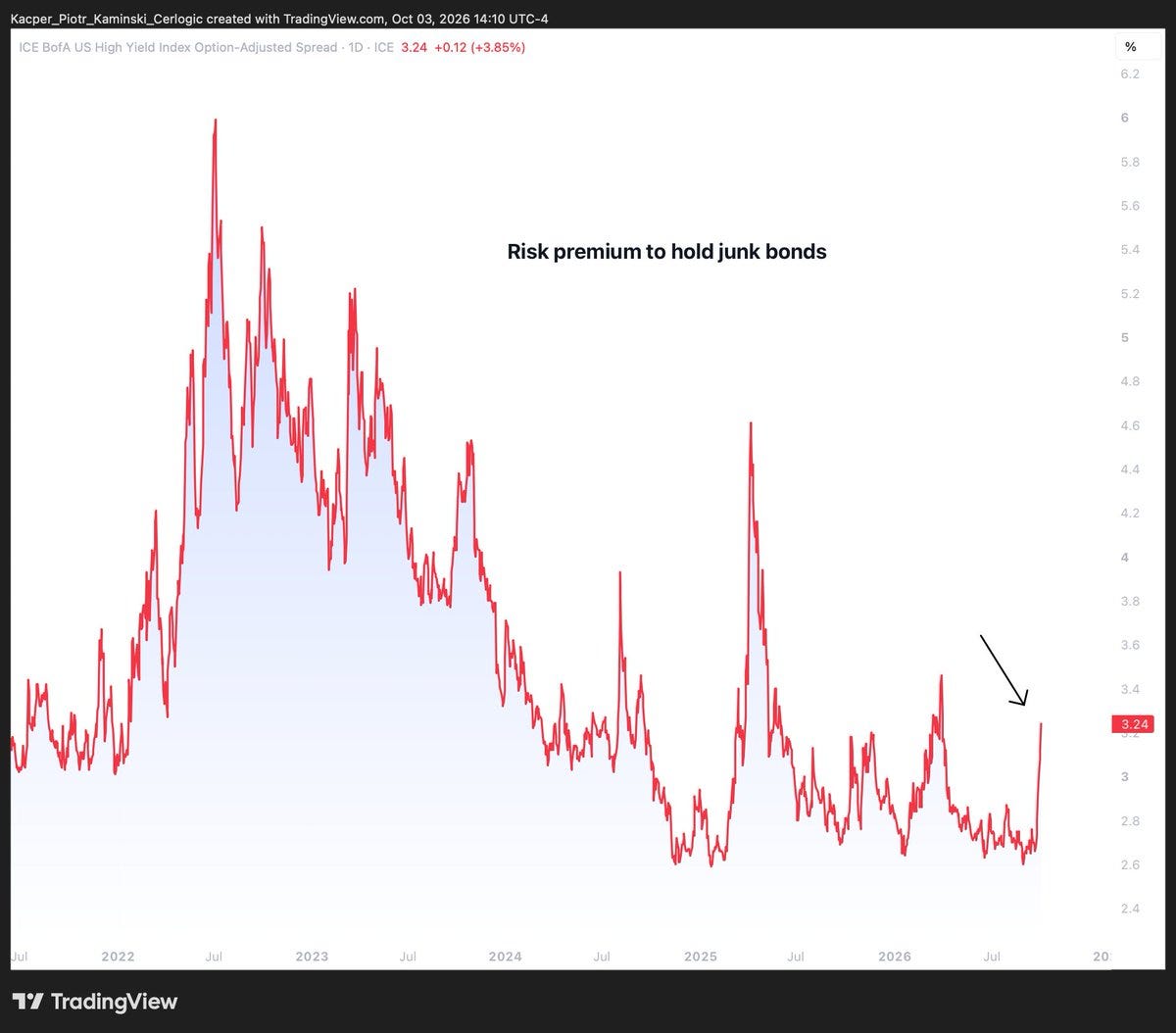
Ever since the Fed meeting in mid September, a great divergence has opened up across US and world markets. Bonds began crashing, everywhere at once, and that put pressure on just about everything except the tech sector.
The mechanics can explain it. Passive flows keep the S&P 500 supported almost all the time, so even a bit of active selling in specific sectors creates tremendous splits underneath. With the index stuck in place and rate-sensitive sectors being sold, something has to go up, that’s tech, and once it does, momentum piles in on top.
Then there’s politics, and time is running out. They’d love to squeeze the markets here, the only question is whether they can, and for how long. It would likely take a full 180 on policy, tariffs or the MOU, to pull it off. Either way, we don’t assume they can manage the tape as well as they think, just look at how bonds traded after the “I’m the house now” comments and the string of long paper buybacks.
Divergence is also global now. While US is holding well, Europe and the UK are rolling over, Euro and Pound are weaker too, and it’s the same story in Canada and Australia. Japan is the lone exception, the Nikkei still strong, and the why is telling, the Yen gets propped up by periodic interventions, and it’s .. yes, extremely tied to the AI trade too.
As you know by now, we go long where the trend is established and ride the wave, as long as it lets us. Right now tech is about the only thing that is rising, which is to say the AI trade. It’s the whole growth story and it simply cannot slow down. It either advances, or it’ll start collapsing. We participate, but we watch closely for the first signs of a change and stay ready to turn, fast.
In more general view, structurally, still nothing really changes. Governments are spending like there’s no tomorrow, social transfers, defense, energy, maybe now the private AI tab too.
So the only real question is not about the fundamentals, it’s whether that debt-funded race keeps getting the money creation behind it, and that’s ultimately a policy call.
Then we have a cycle grinding into its late phase, yields climbing, equities topping, commodities still strong. More money would just reinforce it, less money would take us to the last stage, we’ll see what they do and adjust.
So patience is key, the real money is made at the start of a move, from depressed levels, and we see almost nothing like that out there now. We trade what’s in front of us, hold what’s still working, but also keep the dry powder for the next big opportunity. Longevity is key.
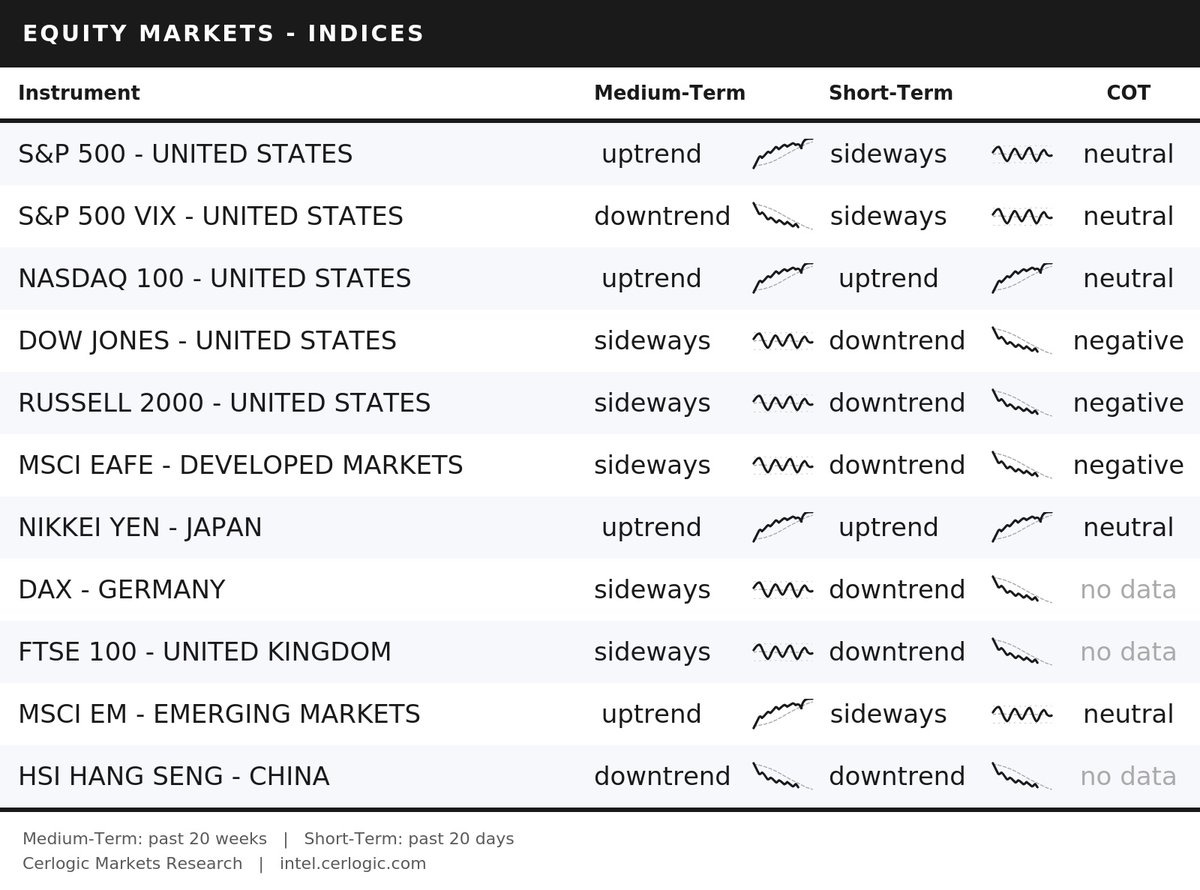
SHORT-TERM TREND CHANGES SINCE LAST WEEK
• FTSE 100 – UNITED KINGDOM: sideways ➝ downtrend
MEDIUM-TERM TREND CHANGES SINCE LAST WEEK
• S&P 500 VIX – UNITED STATES: sideways ➝ downtrend
• MSCI EAFE – DEVELOPED MARKETS: uptrend ➝ sideways
• NIKKEI YEN – JAPAN: sideways ➝ uptrend
• DAX – GERMANY: uptrend ➝ sideways
• FTSE 100 – UNITED KINGDOM: uptrend ➝ sideways
COT CHANGES SINCE LAST WEEK
• RUSSELL 2000 – UNITED STATES: neutral ➝ negative
CHARTS OF THE WEEK :
FOREX
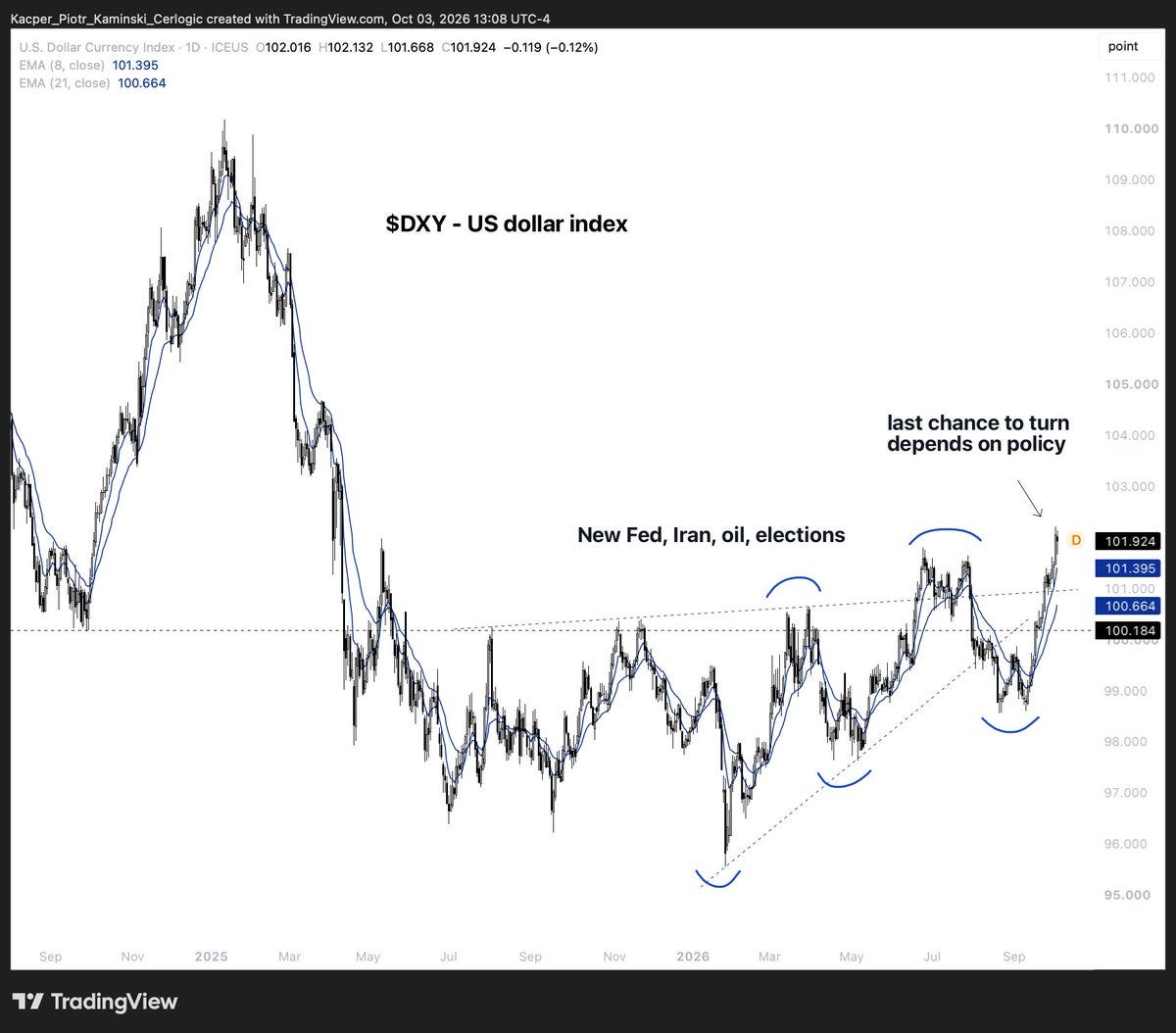
The dollar run is starting to bite. We had double news on Friday that should have smashed it, bad jobs numbers and the G7 news on oil / diesel release, still no real give-back. Will it last is still the political question, war, oil, the TGA account, a Fed flip, but for now the trend is the trend.
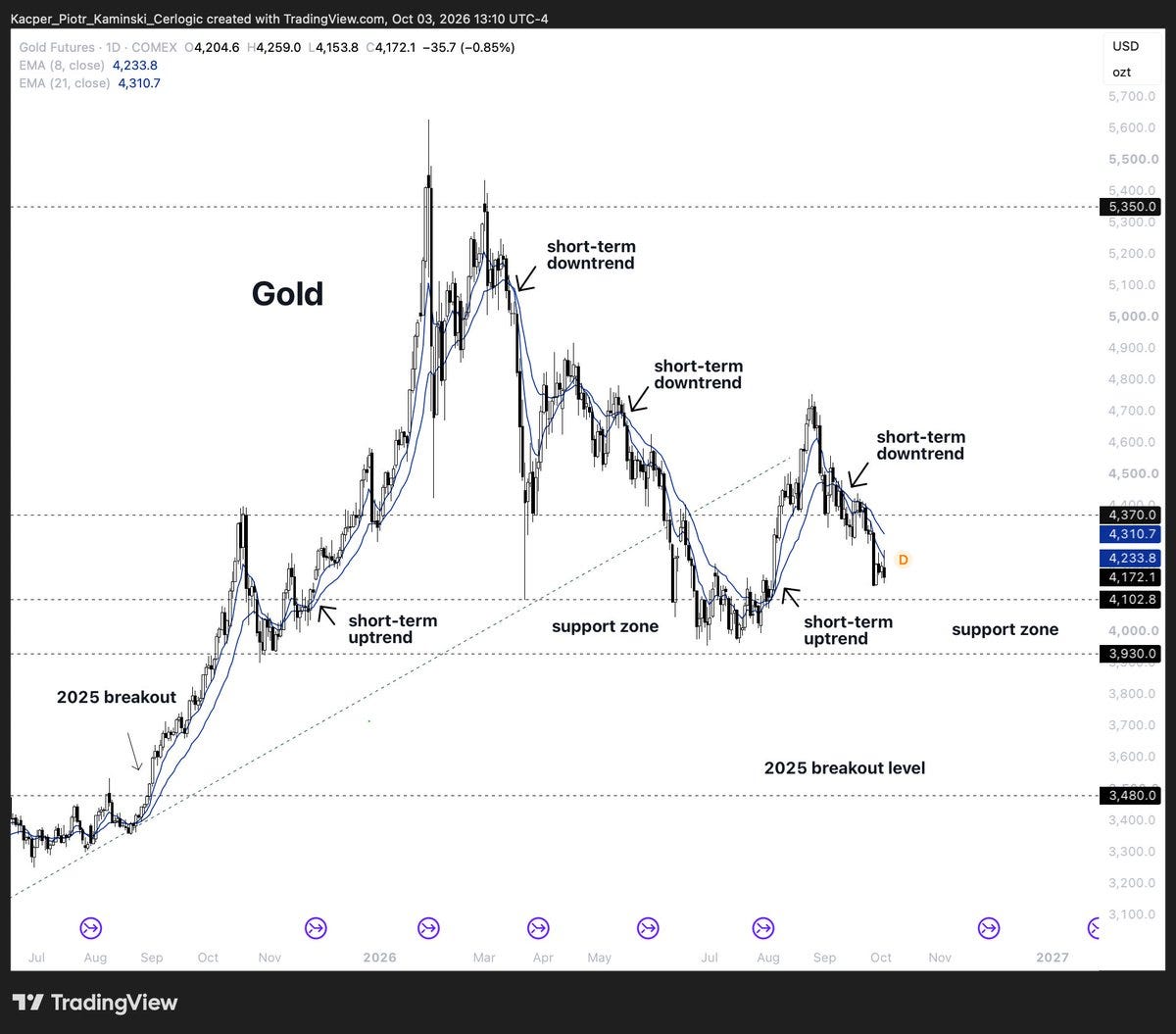
And gold, the pullback has gone a step further, we’re now in a downtrend on both timeframes. It’s the stronger dollar and rates doing their work. No longs in trading, but harvest and accumulation in the Gold Strategy.
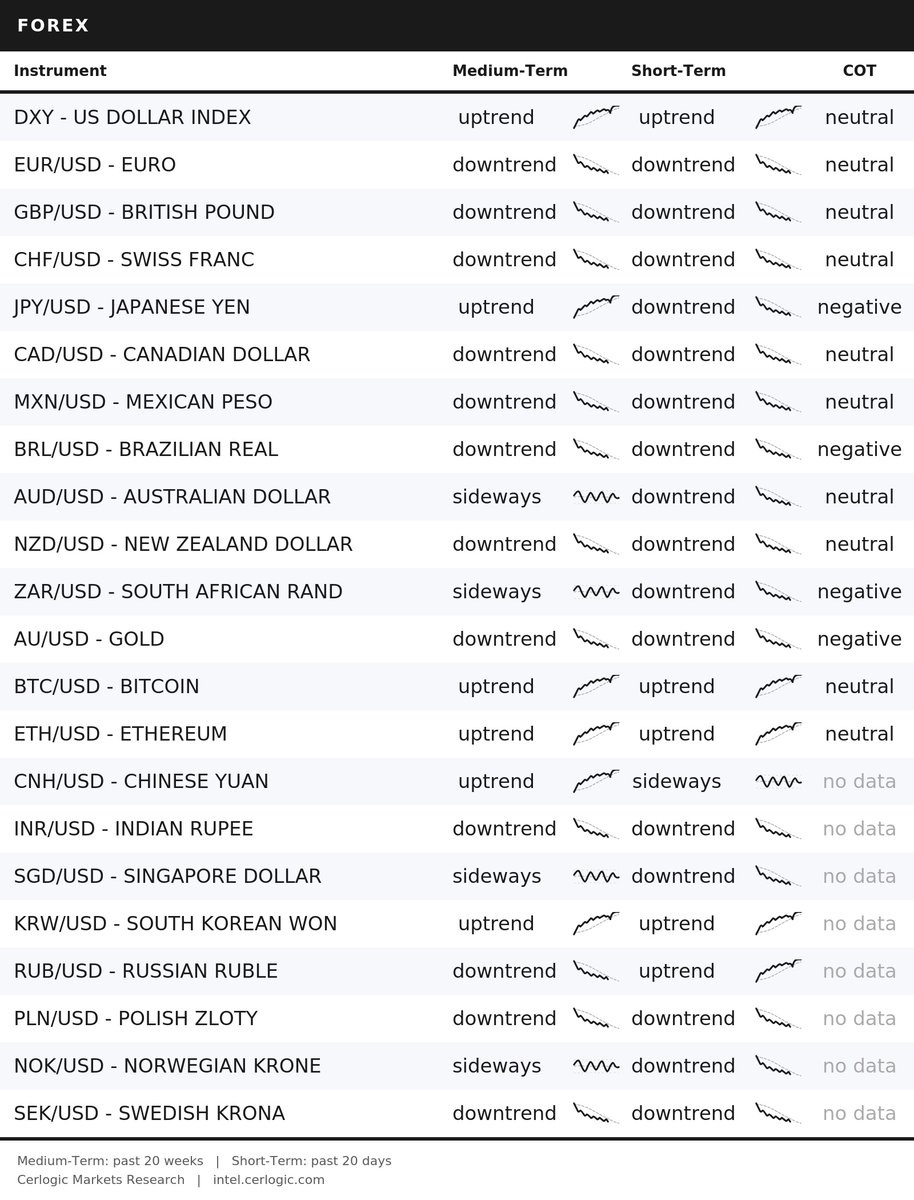
SHORT-TERM TREND CHANGES SINCE LAST WEEK
• RUB/USD – RUSSIAN RUBLE: sideways ➝ uptrend
MEDIUM-TERM TREND CHANGES SINCE LAST WEEK
• GBP/USD – BRITISH POUND: sideways ➝ downtrend
• MXN/USD – MEXICAN PESO: sideways ➝ downtrend
• ZAR/USD – SOUTH AFRICAN RAND: uptrend ➝ sideways
• AU/USD – GOLD: sideways ➝ downtrend
• SGD/USD – SINGAPORE DOLLAR: uptrend ➝ sideways
COT CHANGES SINCE LAST WEEK
• JPY/USD – JAPANESE YEN: positive ➝ negative
• MXN/USD – MEXICAN PESO: negative ➝ neutral
CHARTS OF THE WEEK :
INDUSTRIAL METALS
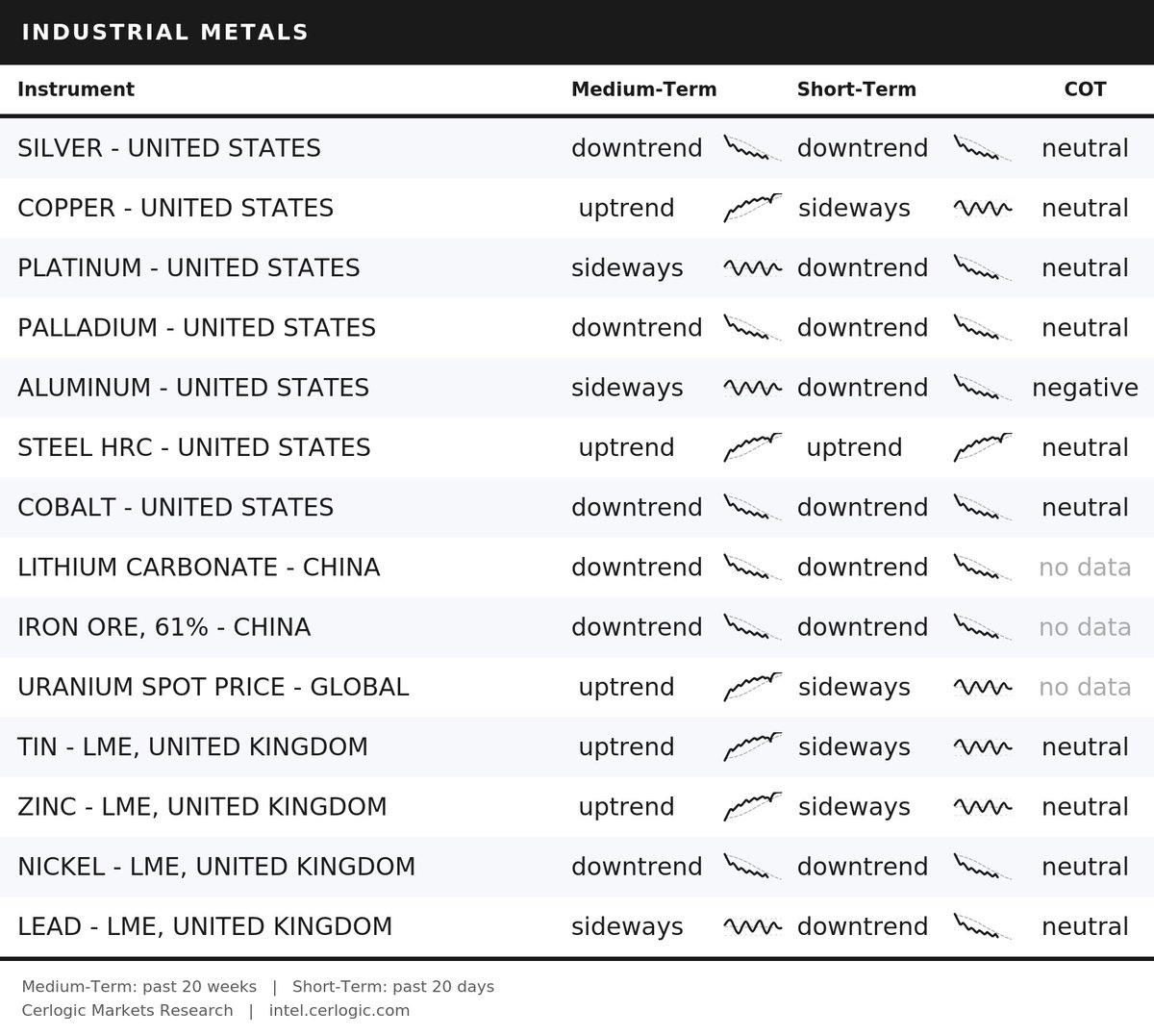
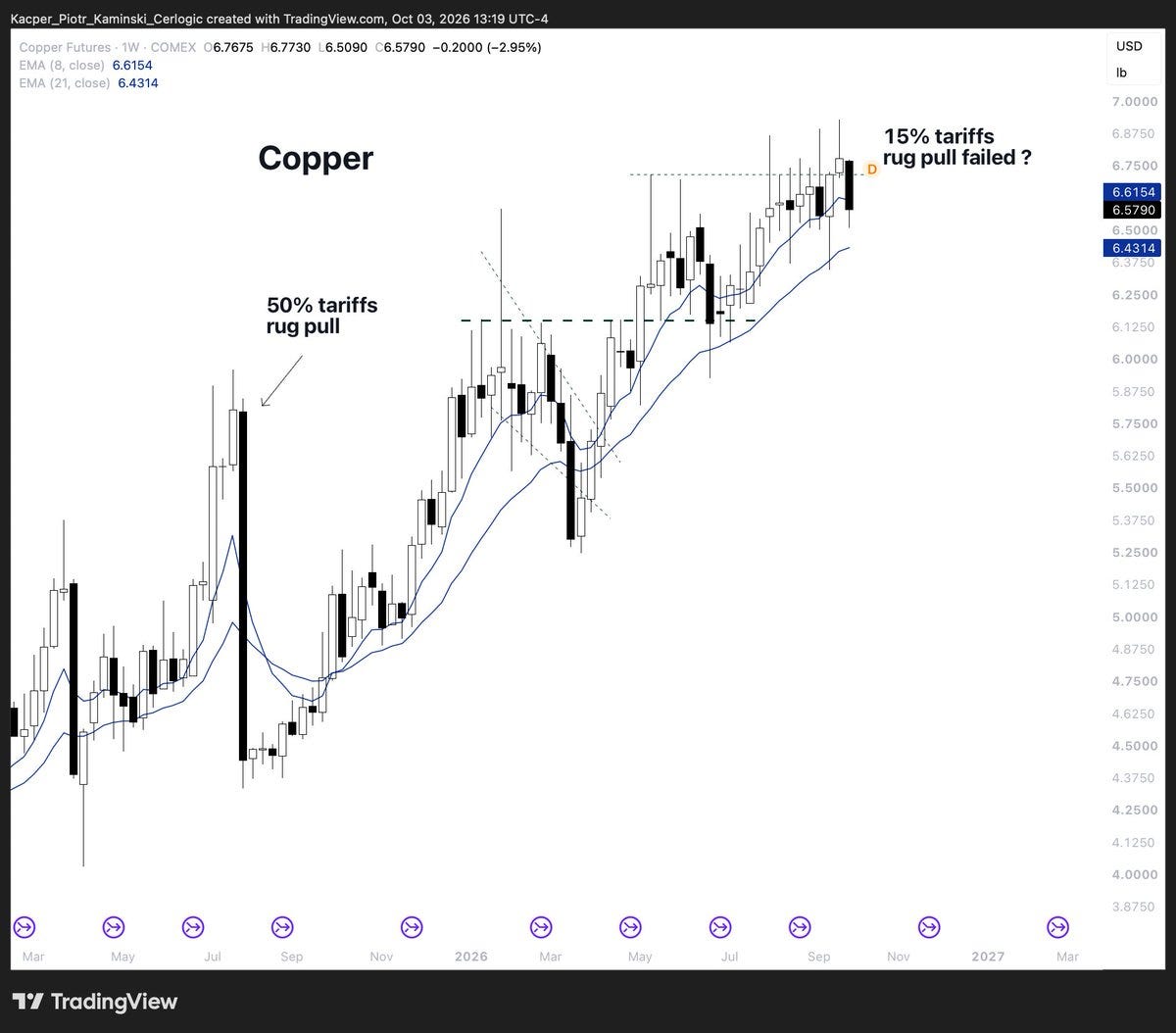
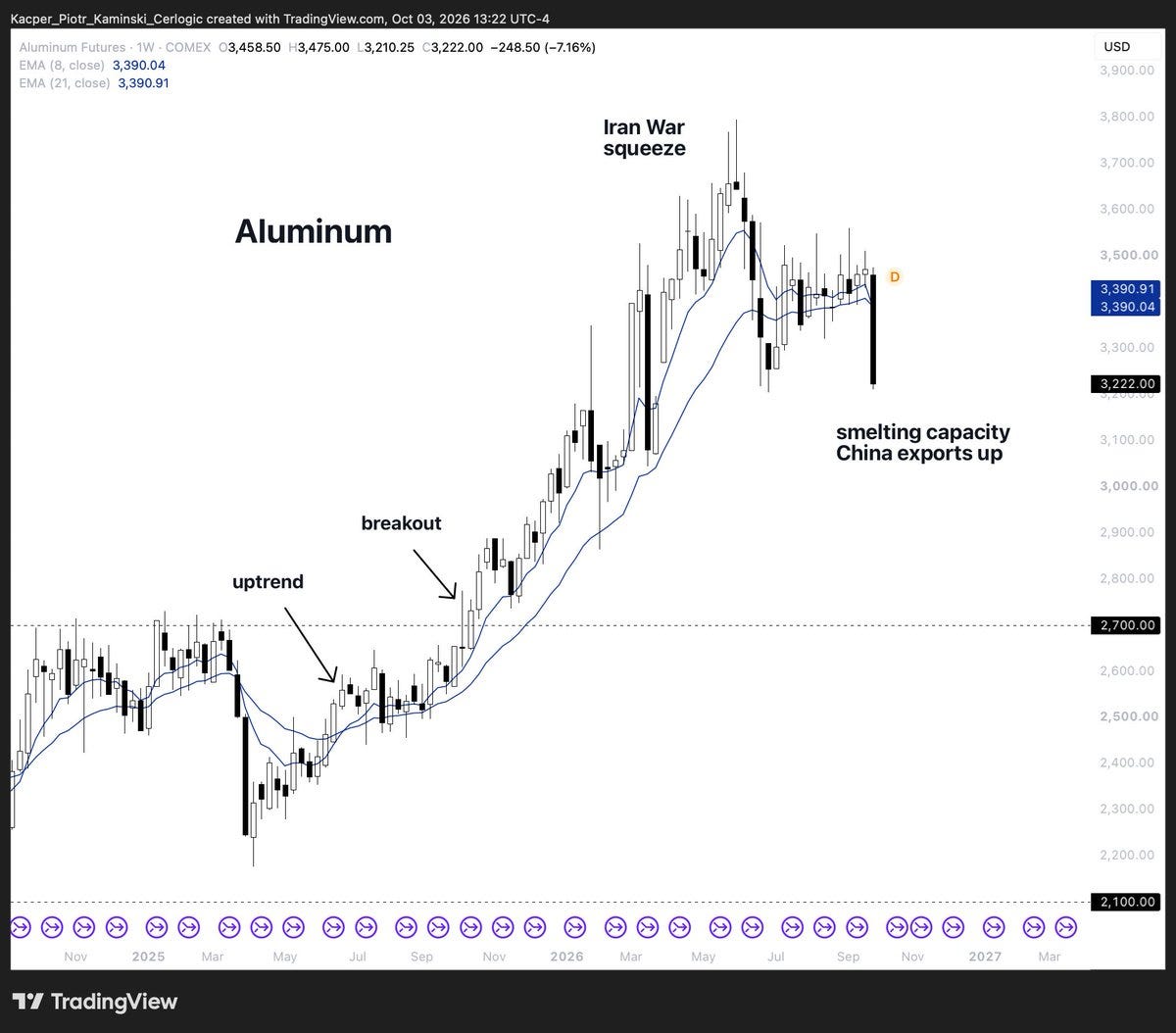
The dollar’s strength is washing through the metals too. The last holdout, copper, slipped from its short-term uptrend back to sideways. It’s still the king on the bigger picture, but taking a breather.
Tin, zinc and uranium are holding well, but the rest of the base metals complex is weaker, aluminum rolling over, and cobalt, iron ore and lead all in short-term downtrends now. The precious side stays under pressure.
Where we go from here is still largely a political question, tied to the energy crisis, same as pretty much every week since March. In the short term anything can happen, so we stay flexible.
SHORT-TERM TREND CHANGES SINCE LAST WEEK
• COPPER – UNITED STATES: uptrend ➝ sideways
• ALUMINUM – UNITED STATES: sideways ➝ downtrend
• COBALT – UNITED STATES: sideways ➝ downtrend
• IRON ORE, 61% – CHINA: sideways ➝ downtrend
• LEAD – LME, UNITED KINGDOM: uptrend ➝ downtrend
MEDIUM-TERM TREND CHANGES SINCE LAST WEEK
• SILVER – UNITED STATES: sideways ➝ downtrend
• ALUMINUM – UNITED STATES: uptrend ➝ sideways
• COBALT – UNITED STATES: sideways ➝ downtrend
COT CHANGES SINCE LAST WEEK
• ALUMINUM – UNITED STATES: neutral ➝ negative
• LEAD – LME, UNITED KINGDOM: positive ➝ neutral
CHARTS OF THE WEEK :
ENERGIES
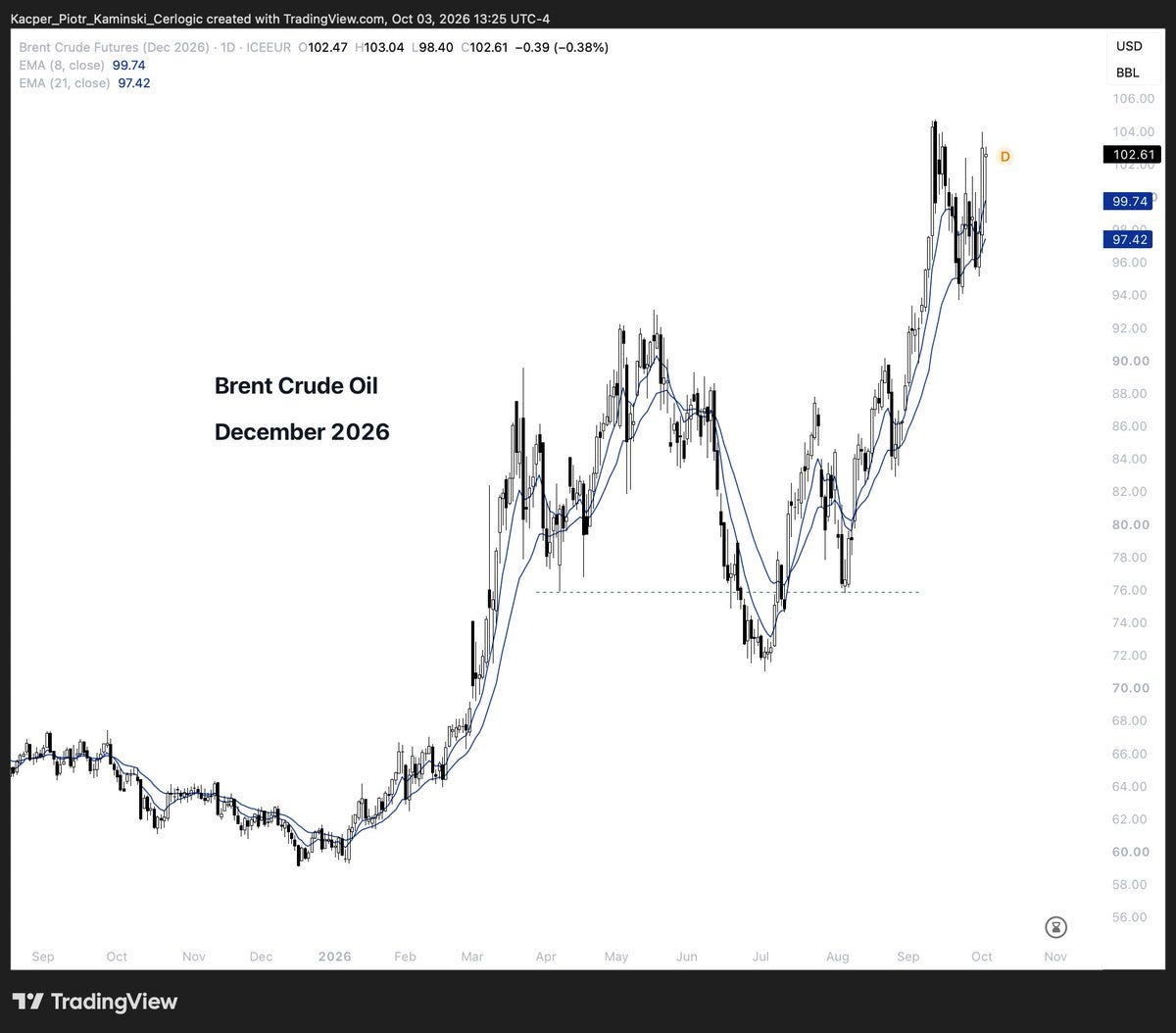
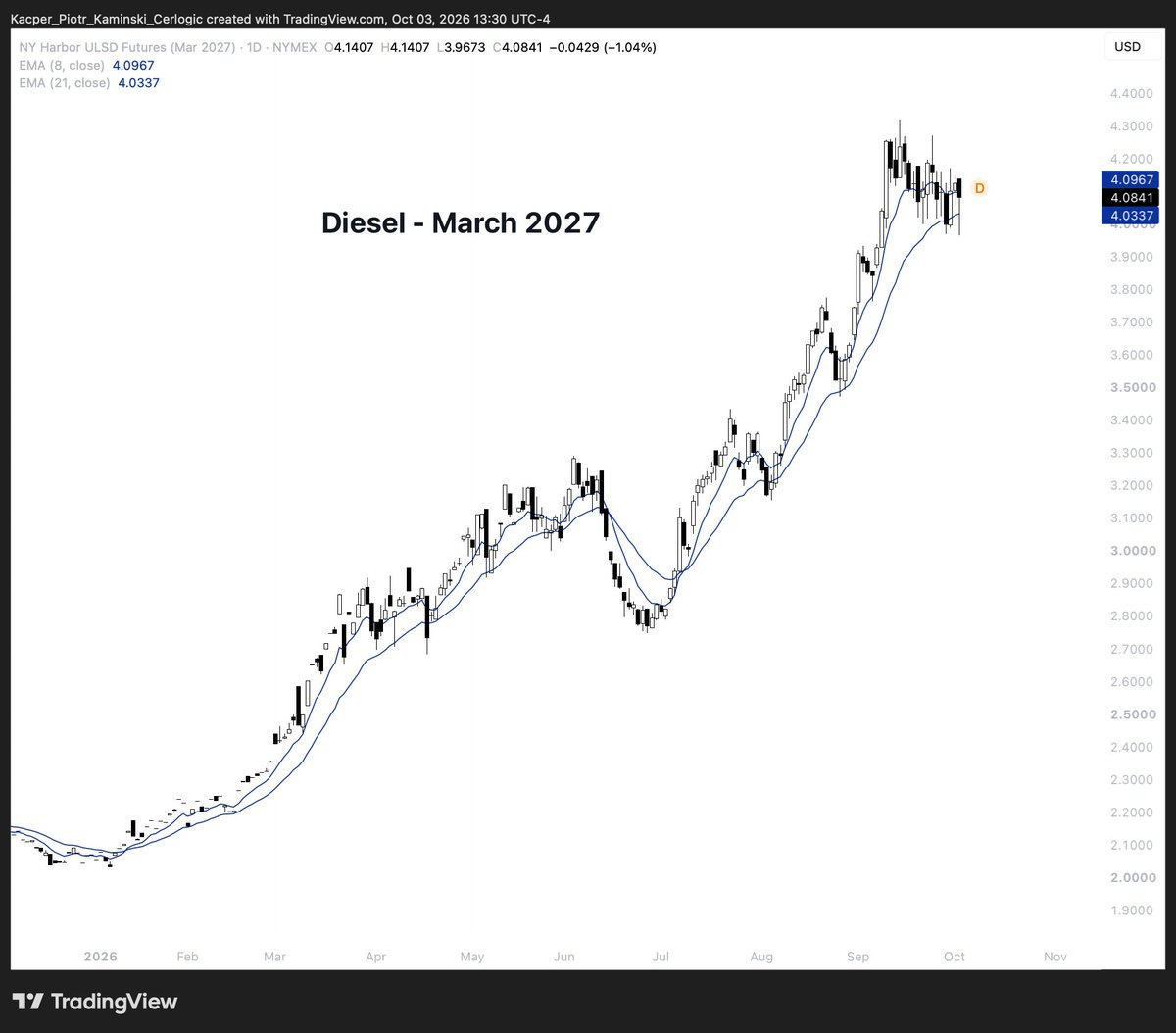
So we had a coordinated G7 emergency release announcement on Friday, 100 million barrels in a “flexible mix” of diesel and crude oil.
Almost no reaction. We’re in serious trouble now.
Short-term direction will still depend on the political decisions, the Middle East, the Houthis and the Saudis, still Russia, and it doesn’t look like it’ll be over anytime soon. But only a real, serious de-escalation can reverse the energy crisis now.
Nothing will change what already happened though, the damage to production capacity and the depletion of reserves is done, more is coming, and it’ll be with us for years, right into what would anyway be an underinvestment crisis, the one set to bite by the end of this decade.
Easy money has been made, but there are a lot of opportunities here for patient and strategic investors, upstream, midstream, downstream, services, you name it, and we’re ready for it. Our core long-term energy equity positions stay on, hedged for the moment, via an options collar.
SHORT-TERM TREND CHANGES SINCE LAST WEEK
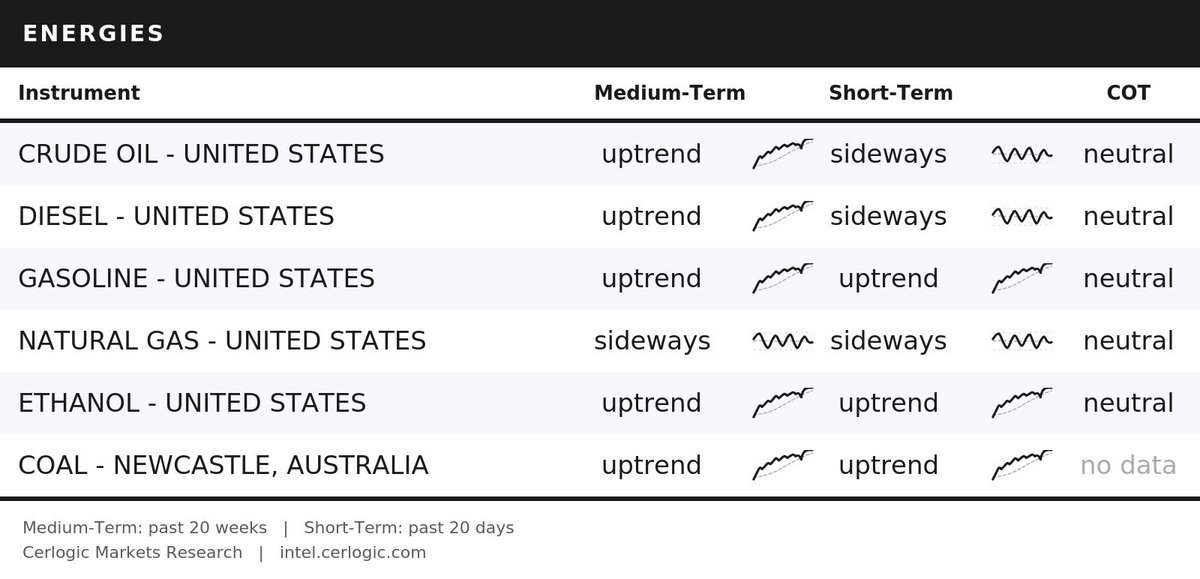
• GASOLINE – UNITED STATES: sideways ➝ uptrend
• NATURAL GAS – UNITED STATES: uptrend ➝ sideways
• COAL – NEWCASTLE, AUSTRALIA: sideways ➝ uptrend
MEDIUM-TERM TREND CHANGES SINCE LAST WEEK
• NONE
COT CHANGES SINCE LAST WEEK
• NONE
CHARTS OF THE WEEK :
TREASURIES
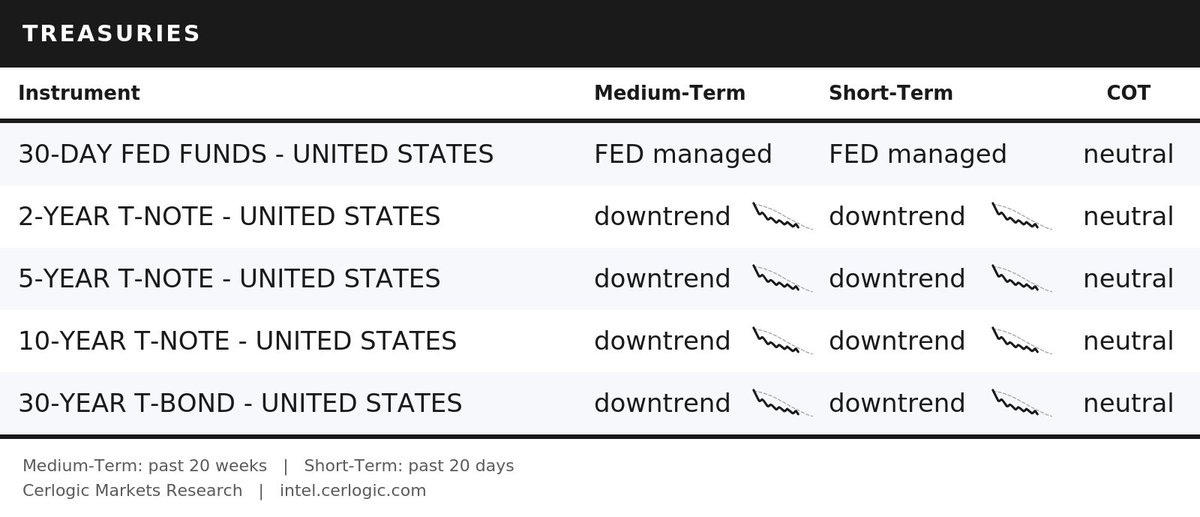
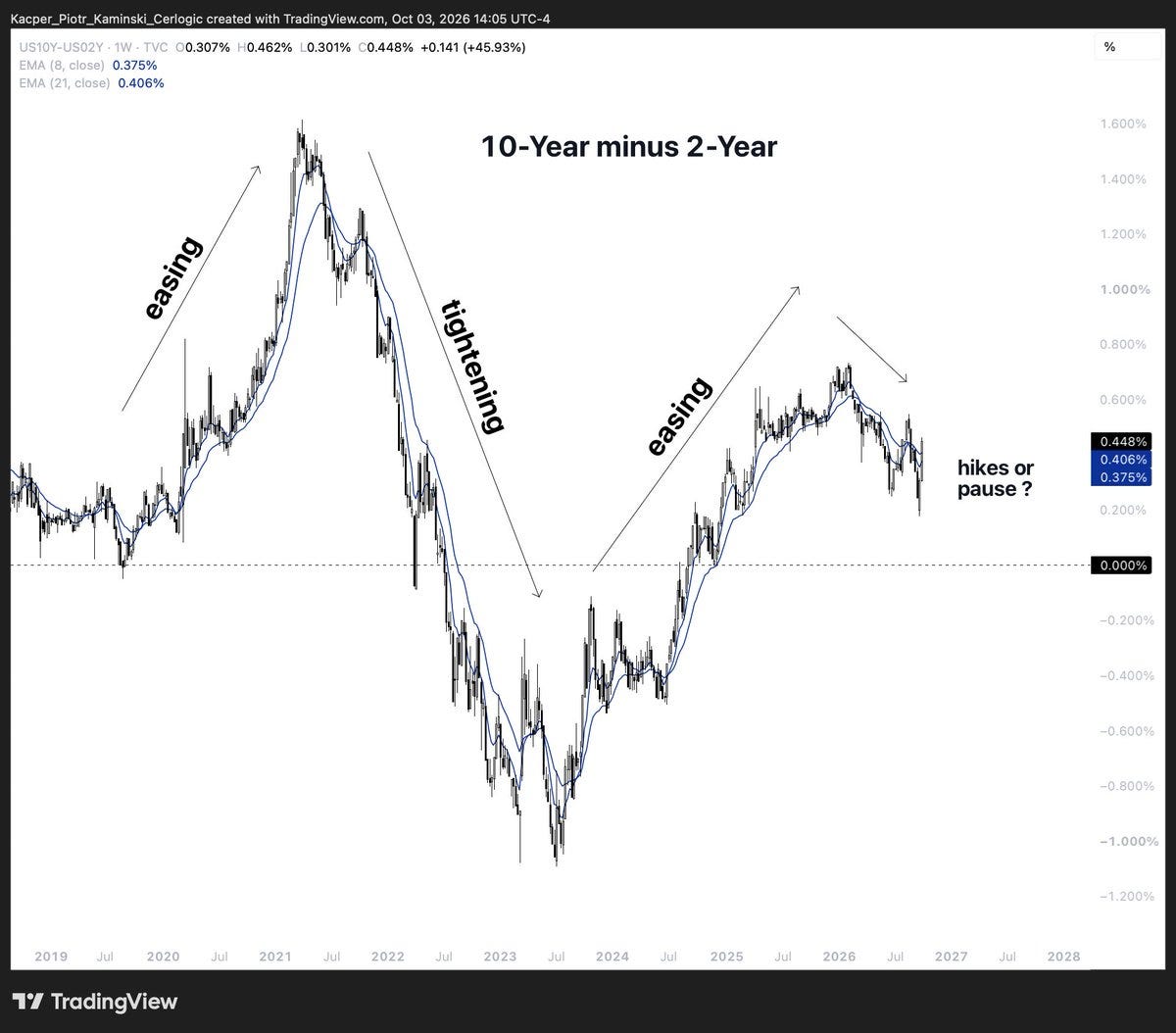
Beatings will continue until morale improves, now week four of it, the whole curve still in a downtrend, nothing moved, even after Friday’s weak jobs data. The Fed hike came and went, and the long end still couldn’t care less.
The path was clear as long as the energy crisis is unresolved, kept writing about it since the war started. Now, yields are a bit extended, moved very fast, so if they reach some kind of arrangement, we’ll likely see a pause, but it has to be real, and it has to hold, at least for a longer while.
If there’s no de-escalation, then oil and yields will find a way to cause a global slowdown on their own, and where exactly that breaking point is, we’ll see. Normally it’d also be a deflationary impulse, higher oil acting as a tax on economic activity, but not in the times we live in. Bonds seem to get it right, this energy crisis will be met by incredible money creation.
As to interventions, the bond markets are simply too large to be moved that easily, it may take trillions, like in 2020. Nothing structural has changed, more deficits, more issuance, more money supply. We still take no longs here.
SHORT-TERM TREND CHANGES SINCE LAST WEEK
• NONE
MEDIUM-TERM TREND CHANGES SINCE LAST WEEK
• NONE
COT CHANGES SINCE LAST WEEK
• NONE
CHARTS OF THE WEEK :
AGRICULTURE
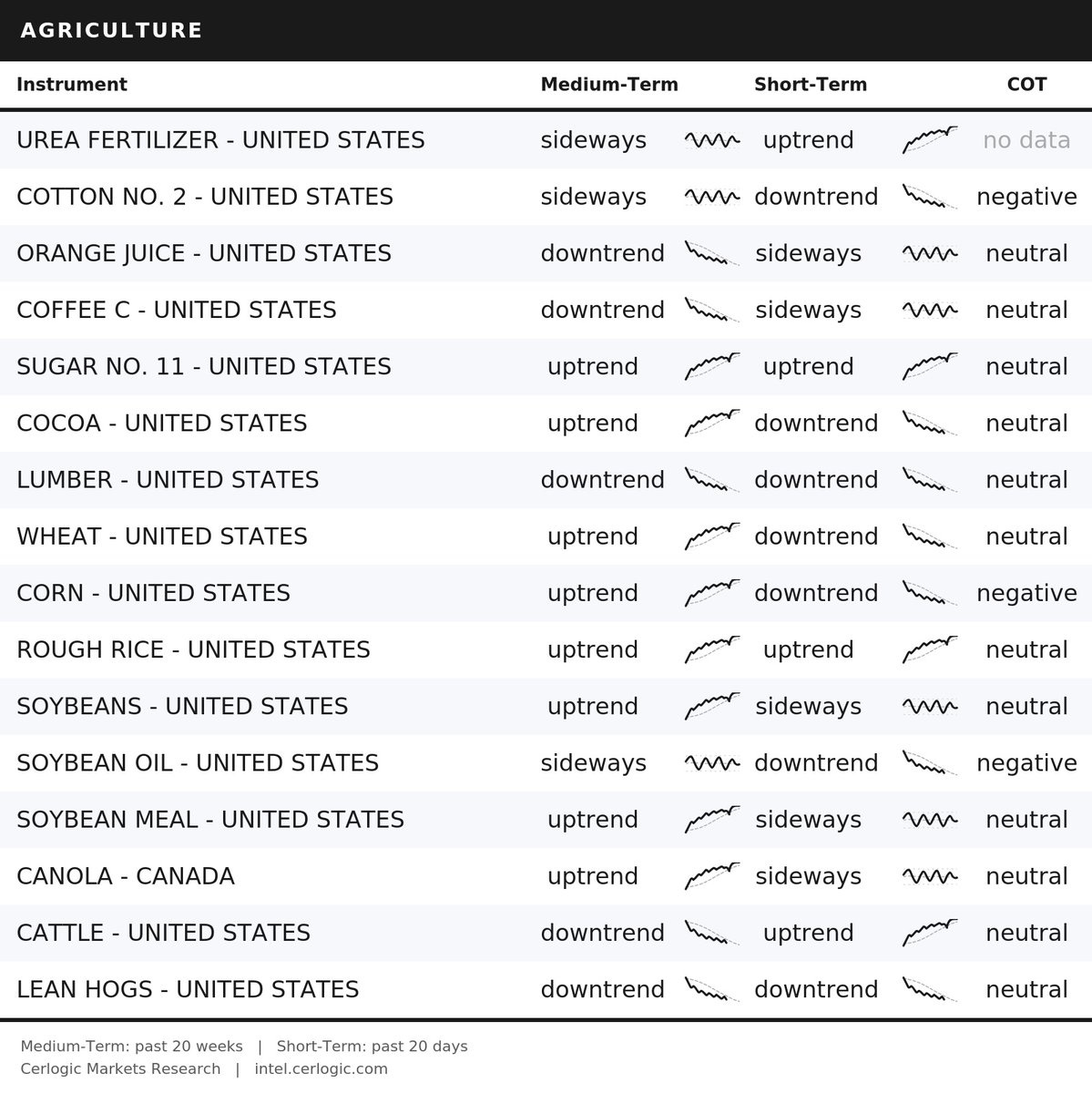
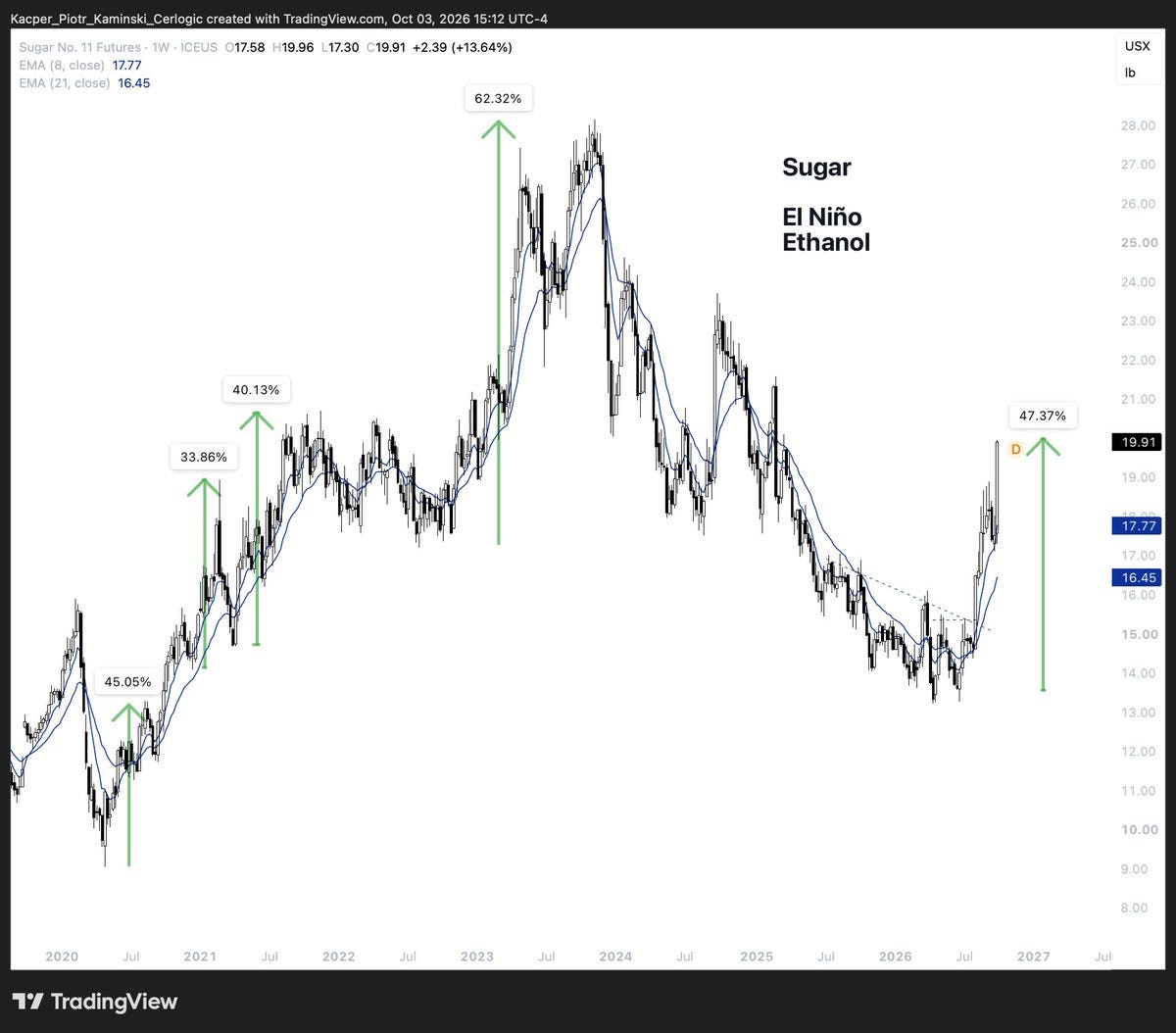
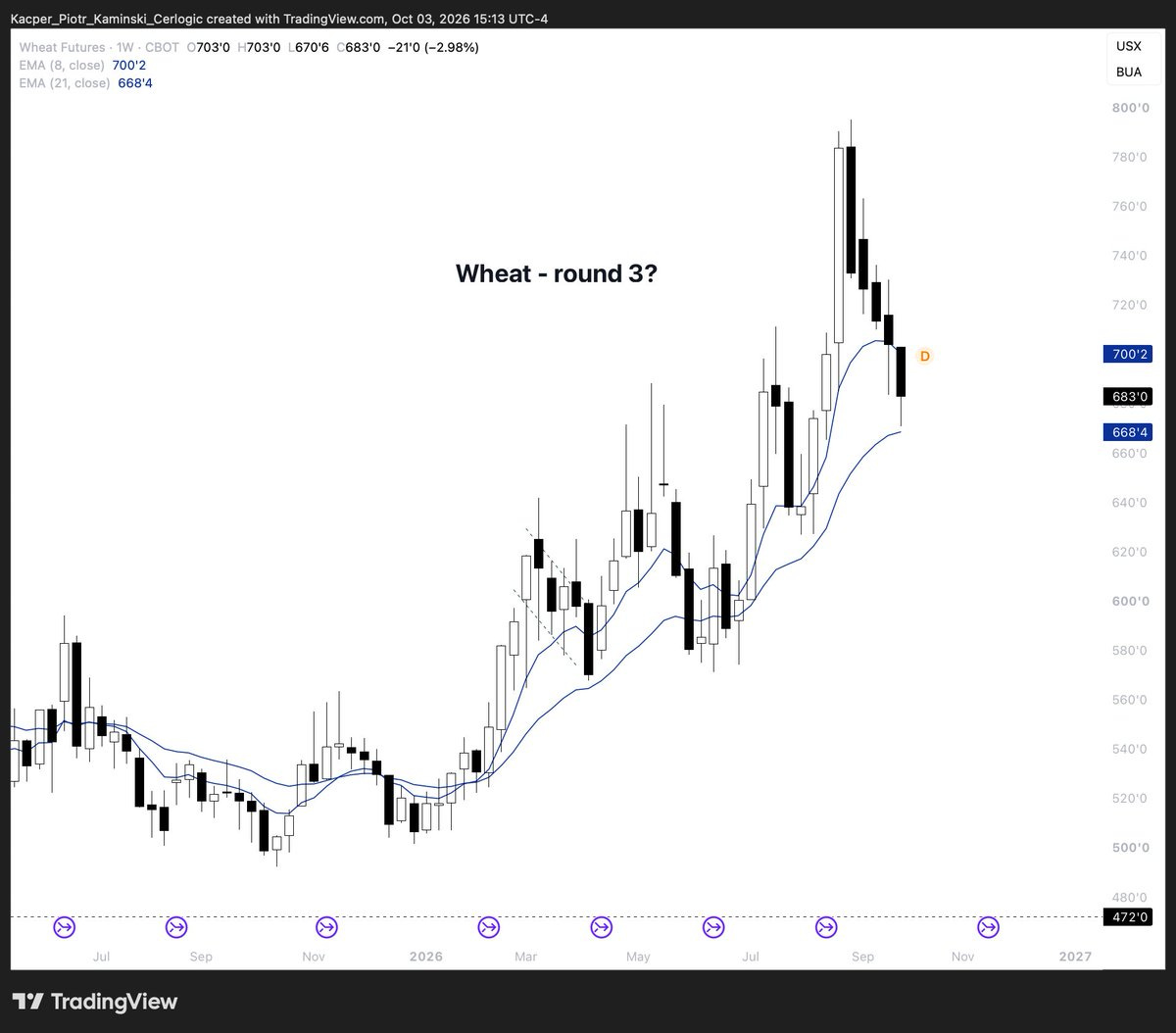
The ags cooled off last week, the grain complex the main give-back. Same story as always when we’re in a bull market in this sector, sharp moves to new highs then violent pullbacks to higher lows, usually driven by headline, it’s just how they behave.
We’re ready for round three, plenty of opportunities, like wheat, are testing their medium-term uptrends. We trade those on top of the core long positions. So there are two ways to play this sector, both good, swing trade the individual commodities short-term, or hold long-term and take the good with the bad of the bull run. We’re comfortable doing both, but it really depends on the trader’s psychology.
The bigger picture stays the same, and it points up. The fertilizer and energy damage is done, and El Niño is still out there. We stay long where the trends hold, and let the prices move as far as necessary to incentivize production.
The crush spread setup we’ve got our eye on is still moving, way ahead of our 2027 base case, we won’t complain, it’s working.
And on fertilizer equities, they typically move well into an ags bull market. Farmers need the money to buy them, so they need to sell their production at high prices into the future. Right now they’re struggling, especially potash and phosphate producers. Nitrogen names fare way better, with natural gas as the main input. Right now fuel prices through the roof, and it’s usually right here that governments step in, subsidies, tax breaks, that’s the tell, it’s where the fertilizer cycle begins.
SHORT-TERM TREND CHANGES SINCE LAST WEEK
• ORANGE JUICE – UNITED STATES: uptrend ➝ sideways
• COFFEE C – UNITED STATES: downtrend ➝ sideways
• SUGAR NO. 11 – UNITED STATES: sideways ➝ uptrend
• CORN – UNITED STATES: uptrend ➝ downtrend
• SOYBEANS – UNITED STATES: uptrend ➝ sideways
• SOYBEAN MEAL – UNITED STATES: uptrend ➝ sideways
• CANOLA – CANADA: uptrend ➝ sideways
MEDIUM-TERM TREND CHANGES SINCE LAST WEEK
• COTTON NO. 2 – UNITED STATES: uptrend ➝ sideways
COT CHANGES SINCE LAST WEEK
• WHEAT – UNITED STATES: negative ➝ neutral
• CORN – UNITED STATES: neutral ➝ negative
CHARTS OF THE WEEK :
That’s it for now. Stay safe out there!
Kacper Piotr Kaminski, Cerlogic Markets Research – intel.cerlogic.com
This publication is for informational and educational purposes only and does not constitute investment advice. Markets involve risk, and every participant is responsible for their own decisions.